Definition
Eczema, also called Atopic Dermatitis, is a recurring inflammation of the skin and is characterized by red, dry and crusty skin. It is most commonly found on the face, wrists, insides of the knees and elbows and may also affect the chest and trunk areas. These areas also tend to be hot and sweaty, so heat can aggravate the condition. The skin constantly itches, and there may be oozing blisters. Frequent scratching and rubbing may cause the skin to become thick, hard, discoloured and scaly. Although not an infectious condition, eczema may be accompanied by a contagious staph infection of the skin. Eczema occurs most often in infants, and in such cases, usually clears up by itself by the time the child is 18 months old. Conditions may present as erythematous, edematous, papular, vesicular, or crusting. These conditions may progress to lichenification, and scaling. They are categorized according to endogenous and exogenous causes with the latter further divided into light reactive and non-light reactive.
Causes
The causes are varied and may include stress, fatigue, allergies, leaky gut syndrome, infections and nutrient deficiencies and may play a role in allowing endogenous or exogenous irritants to cause uncomfortable skin conditions. Herpes simplex or reactions to vaccinations may lead to grave complications. When there is an acute eczema situation, the patient should not be vaccinated nor exposed to people who have active herpes and other infections.
Diet and Nutrition
Allergies
•"Children with Atopic Eczema I: Clinical Response to Food Elimination and Subsequent Double-Blind Food Challenge", Sloper, K.S., et al, Quarterly Journal of Medicine, August 1991; New Series 80(292):677-693
•"Early Solid Feeding and Recurrent Childhood Eczema: A 10 Year Longitudinal Study", Fergusson, D.M., et al, Pediatrics, 1990;86:541-546
•"Atopic Eczema, Langerhans Cells and Allergy", Ring, Johannes, et al, International Archives of Allergy and Applied Immunology, 1991;94:194-201
Probiotic Deficiency
•"Lactobacillus rhamnosus cell lysate in the management of resistant childhood atopic eczema," Hoang BX, Levine SA, et al, Inflamm Allergy Drug Targets, 2010; 9(3): 192-6
•"Effect of Lactobacillus sakei supplementation in children with atopic eczema-dermatitis syndrome," Woo SI, Hahn YS, et al, Ann Allergy Asthma Immunol, 2010; 104(4): 343-8
•"Low diversity of the gut microbiota in infants with atopic eczema," Abrahamsson TR, Jakobsson HE, et al, J Allergy Clin Immunol, 2011 Dec 6
Fatty Acid Deficiency
•"Evening Primrose Oil in Atopic Eczema," Horrobin DF and Stewart C, Lancet, April 7, 1990;335:864-865
•"Levels of Essential and Other Fatty Acids in Plasma and Red Cell Phospholipids From Normal Controls in Patients With Atopic Eczema", Oliwiecki, S., et al, ACTA Derm. Venereol. Stockh., 1990;71:224-228
•"Docosahexaenoic acid (DHA) supplementation in atopic eczema: a randomized, double-blind, controlled trial," Koch C, Dolle S, et al, Br J Dermatol, 2008; 158(4): 786-92
•"A Double-Blind, Randomized, Placebo-Controlled Trial of n-3 Verus n-6 Fatty Acid-Based Lipid Infusion in Atopic Dermatitis," Mayser P, Mayer K, Mahloudjian M, et al, JPEN, 2002;26:151-158
Vitamin E Deficiency
•"Association of serum carotenoids and tocopherols with atopic diseases in Japanese children and adolescents," Okuda M, Hobara T, et al, Pediatr Allergy Immunol, 2010 Apr 30
Vitamin C and Iron Deficiencies
•"High Iron and Low Ascorbic Acid Concentrations in the Dermis of Atopic Dermatitis Patients," Leveque N, Robin S, Muret P, et al, Dermatology, 2003;207:261-264
Zinc Deficiency
•"Low Serum Zinc in Children With Atopic Eczema," David TJ, et al, Br J Dermatol, 1984;111:597-601
Herbs
Burdock Root
•"Phytotherapeutic Approaches to Common Dermatologic Conditions," Brown DJ and Dattner AM, Arch Dermatol, November, 1998;134:1401-1404
Other Herbs
- Arctium lappa: for decreased cutaneous circulation, impaired nutrition of the skin; it inhibits phosphodiesterase
- Berberis aquifolium:
- Calendula officinalis: for healing and antimicrobial properties
- Chamomilla spp.: compress for weeping eczema; also in bath for irritation
- Glycyrrhiza glabra: with adrenal involvement
- Hydrastis canadensis: internally and externally
- Juglans cinerea: skin eruptions from faulty elimination: with Taraxacum officinale root
- Oenothera biennis oil: internally: atopic hyperactive eczema of children, ichthyosis with marked pruritus
- Rumex crispus: with Taraxacum officinale
- Stellaria media: as an ointment for itching
- Trifolium pratense: with Rumex crispus in chronic skin disease
- Urtica spp.: nervous eczema, cutaneous eruptions; combines well with Arctium lappa root
- Viola tricolor: with serous exudate, particularly when associated with rheumatic symptoms
- Zizyphus jujube: Sweet fruit has a high nucleotide content which stimulates adenylate cyclase activity
Stress
Mind and emotions play a definite role in the course of atopic dermatitis. The evidence does not necessarily imply that emotion causes the disease, but it becomes readily apparent that the state of mind may have a definite and remarkable effect on the course of the disease.
•"Effect of Stress on Atopic Dermatitis: Investigation in Patients After the Great Hanshin Earthquake," Kodama A, et al, J Allergy Clin Immunol, July, 1999;104(1):173-176
•"Atopic Eczema Psychophysiological Reactivity Under Standard Stress", Munzel, Karin and Schandry, Rainer, Hautarzt, 1990;41:601-611
•"Physical Stress-Induced Secretion of Adrenal and Pituitary Hormones in Patients With Atopic Eczema Compared With Normal Controls," Rupprecht, M., et al, Experimental and Clinical Endocrinology & Diabetes, 1997;105:39-45
Note: in many eczema patients, being hot and sweating from exercise, hot baths and showers may aggravate symptoms
Vaccinations
•"MMR Vaccination Associated With Eczema Risk," Kirn TF, Skin and Allergy News, February 2002:11
Alcohol and Smoking
•"Alcohol and Smoking: Risk Factors For Infectious Eczematoid Dermatitis?", Karvonen, Jaakko, et al, ACTA Derm Venereol, 1992;72:208-210
Summary and Suggestions
Dietary Suggestions
- Treat food sensitivities: Identify and eliminate food sensitivities (see your naturopathic doctor for testing)
- Begin with a four-day rotation diet and the elimination of all major allergens including gluten grains, dairy products, eggs and peanuts which represent the aggravating food in approximately 81% of cases.
- With improvement likely allergens can be reintroduced, one at a time, and the diet can gradually become more inclusive.
- Arachidonic acid: Found in animal foods, this substance gives rise to inflammatory leukotrienes of four series. Therefore, avoid animal products as much as possible
- Eat a high fiber, plant-based, hypo-allergenic diet
- Avoid: alcohol, hot sauces, spicy foods, fried foods, fatty foods, rich foods, salty foods, stimulating foods, coffee, caffeine
Food Suggestions
- Plant foods rich in B-vitamins: asparagus, romaine lettuce, spinach, green peas, eggplant, Brussel sprouts, crimini mushrooms, cauliflower, broccoli, turnip greens, bell peppers, seaweeds, blue-green algae
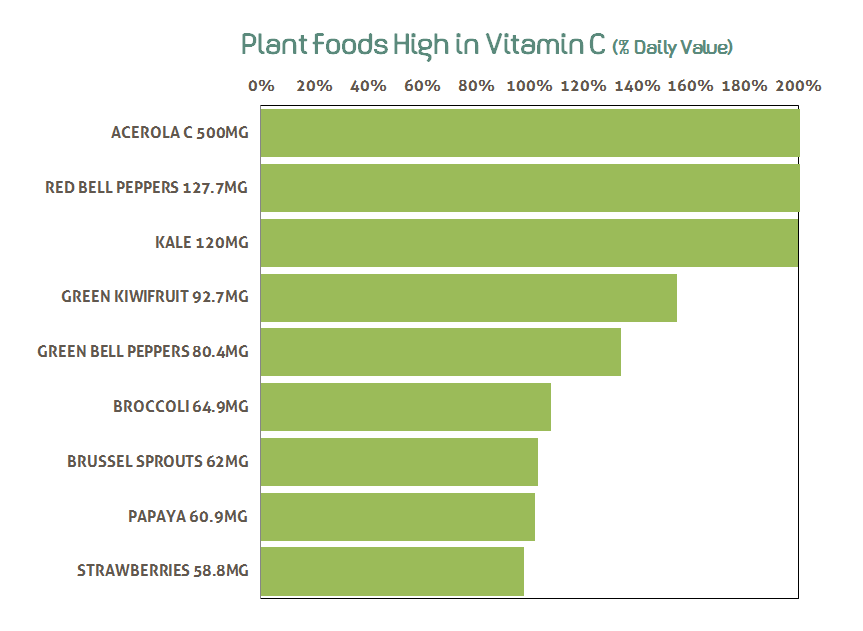
- Plant foods high in Vitamin C: red bell peppers, oranges, kiwifruit, broccoli, Brussel sprouts, papaya, strawberries, pineapple
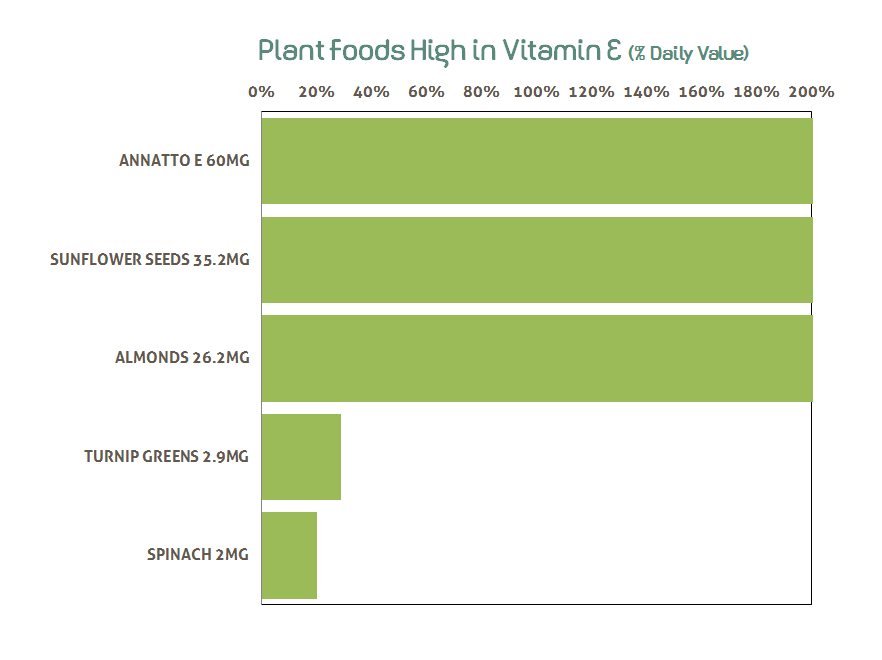
- Plant foods rich in Vitamin E: sunflower seeds, almonds, turnip greens, spinach
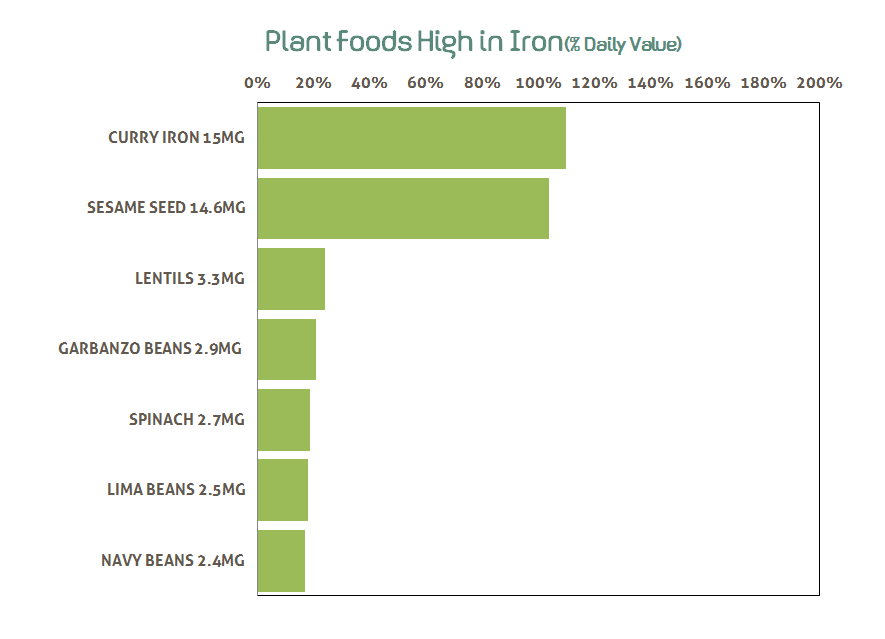
- Plant foods high in Iron: sesame seeds, soybeans, lentils, spinach
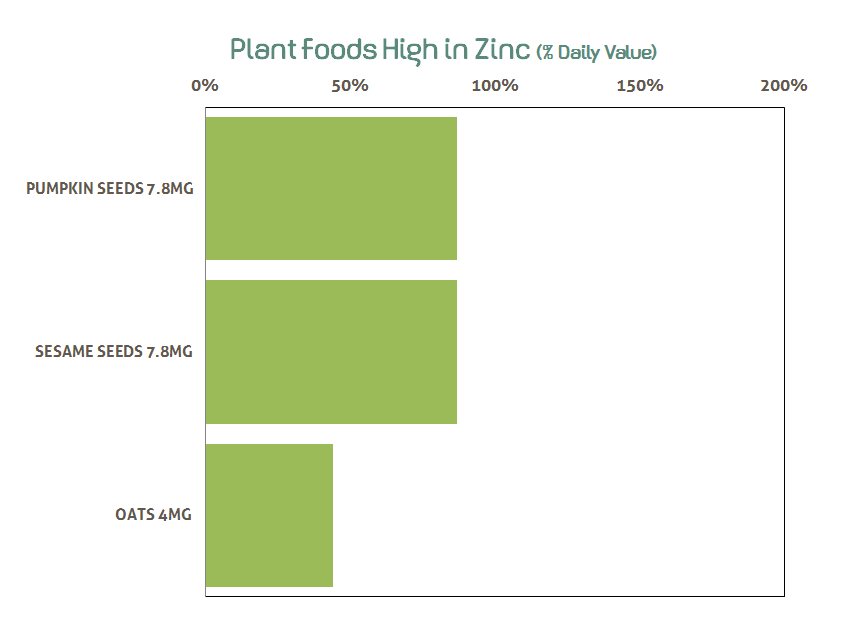
- Plant foods high in Zinc: pumpkin seeds, sesame seeds, oats, spinach
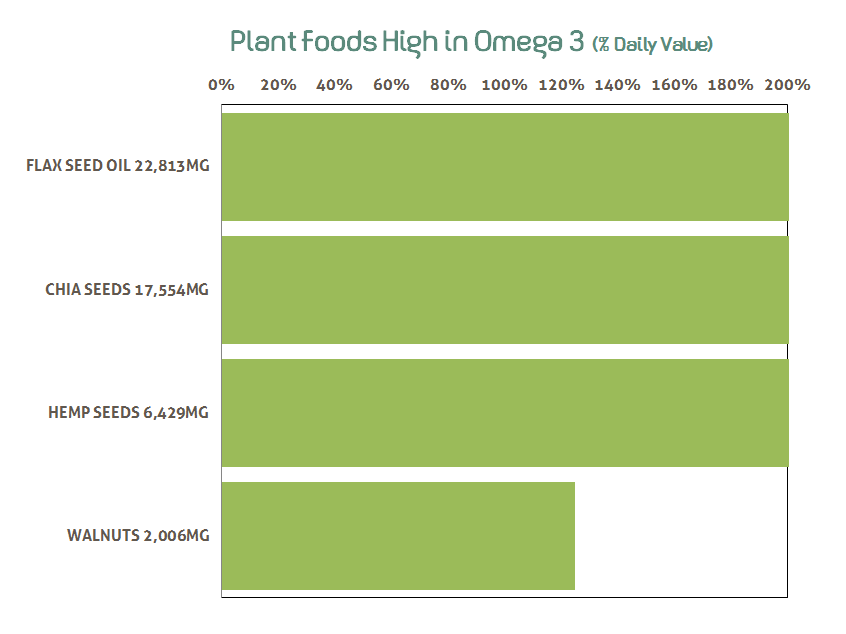
- Plant foods rich in omega-3: flax seed, chia seeds, walnut
- Emphasize: potato, broccoli, dandelion, mung bean, seaweed, adzuki beans, cornsilk, water chestnuts, winter melon, watermelon, Adzuki beans
- Soup: Seaweed and winter melon
Topical Suggestions
- Before bedtime, take a cool tepid bath with oatmeal: place 2-3 cups of oats into the bath and soak for 15-30 minutes, afterwards pad dry with a towel (do not rub the affected areas as it will cause further irritation)
- Cabbage or huckleberry: use externally as a pack
- Take 60-150 g of pomegranate skin, add water and simmer until it thickens; wash affected area several times a day
- Take 150 g of mango skin and simmer in water; wash the affected area several times a day
- Take 250-500 g of pickled plums (plums soaked in vinegar), crush, add water and simmer. Use the liquid to wash the affected area several times a day
- Take 250 g fresh raspberries, or 75 g dried fruit, add water and simmer until reduced to a thick liquid. Use this to wash affected area three times daily
- Peel, seed, and crush unripe papaya and add 30 g each of salt and vinegar. Mix well, then strain and rub liquid on affected parts
- A non-oily zinc ointment applied to the skin as needed may help relieve pain and itching.
- As an alternative, an ointment containing the herb Calendula may be helpful.
Smoothie Suggestions (serves 1)
Ingredients
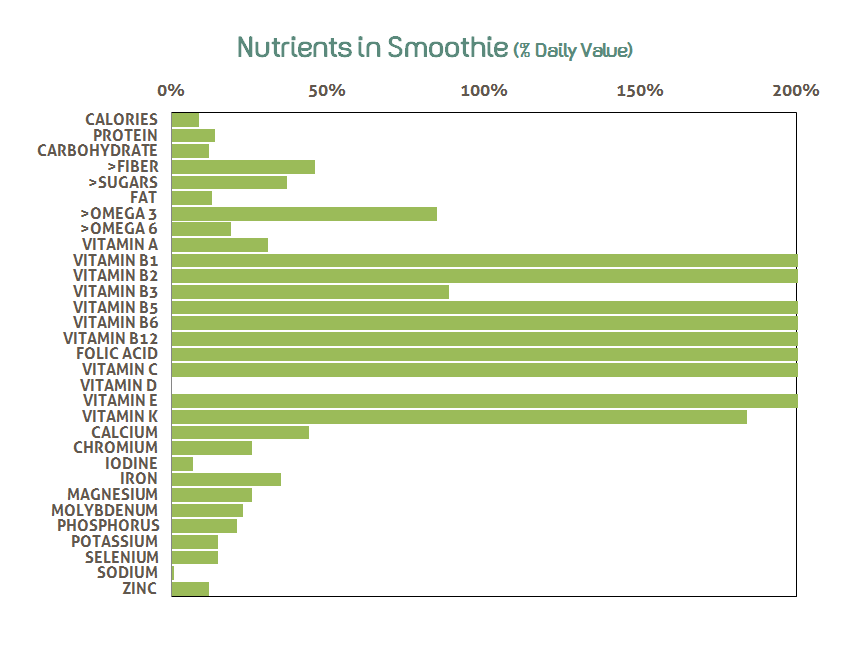
- 1 cup filtered water
- 1 heaping tbsp Purefood A-Z (10 g)
- 1 scoop Purefood B (1.5 g)
- 1 scoop Acerola C (1.25 g)
- 1 scoop Annatto E (0.6 g)
- 1 tsp organic raw chia seeds (6 g)
- 2 tsp organic raw sesame seeds (11.2 g)
- 1 medium organic apple (125 g)
- 1 heaping tsp raw cacao (5.8 g)
Directions
Wash the apple and cut into medium pieces. Combine all ingredients in a blender and blend until smooth. Drink slowly and enjoy.
Substitutions
- Organic non citrus fruit juices to replace water for taste
- Organic raw flaxseed to replace chia seeds for omega fatty acid
- Organic raw pumpkin seeds or walnuts to replace sesame seeds (for zinc
- Fresh organic pear or banana to replace apple for fiber, nutrients and flavor
Juice Suggestion (serves 1)
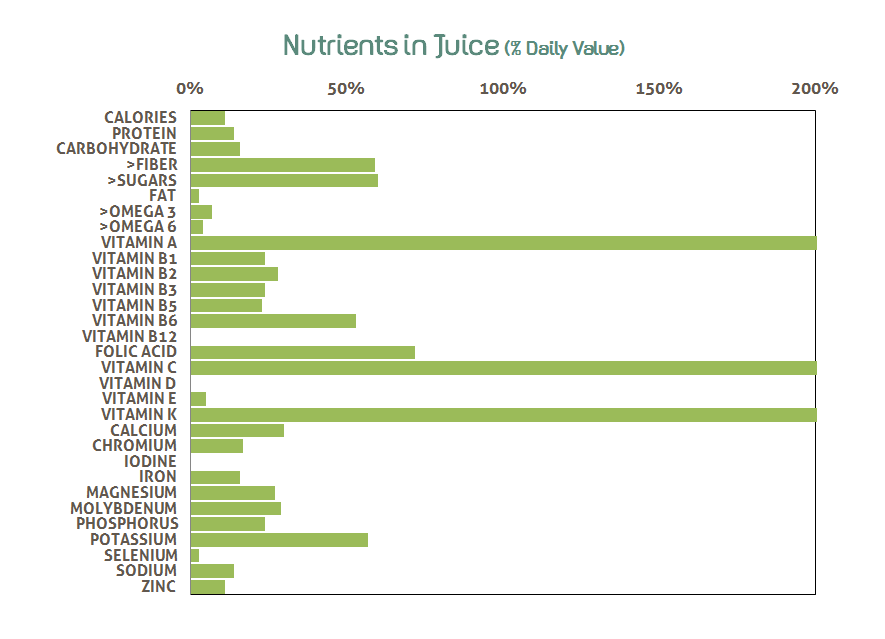
- 2 medium organic carrots (256 g)
- 1/2 organic cucumber (215 g)
- 1/2 red bell pepper (120 g)
- 2 stalks organic celery (170 g)
- 2 leaves organic turnip greens (55g)
Directions
Wash produce well. Cut produce into small enough peices to feed through your juicer. Juice, combine, drink slowly and enjoy!
Substitutions
- Organic beets to replace carrots (vitamin A and other carotenoids)
- Organic apples or strawberries to replace red bell pepper (vitamin C)
- Organic spinach or Swiss chard to replace turnip greens (Vitamin E)
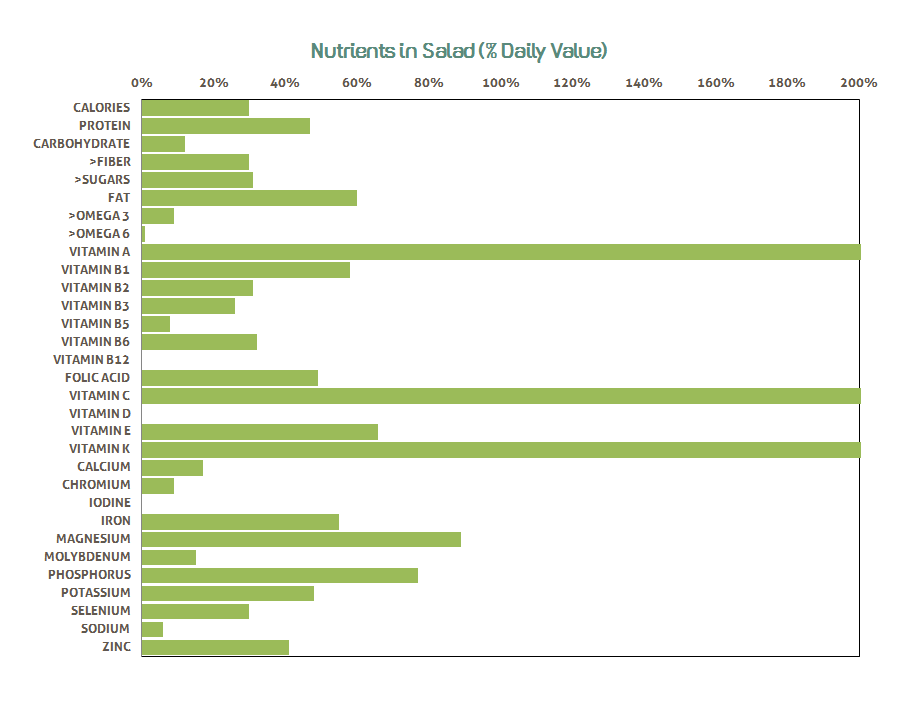
Salad Suggestions (serves 1)
Ingredients
- 2 cups spinach (60 g)
- 1 medium carrot shredded (128 g)
- 1/2 red pepper thinly sliced (120 g)
- 1/4 cup raw pumpkin seeds (52 g)
- 1/4 cup sunflower seeds (35 g)
Directions
Wash greens well and tear into bite size pieces. In a medium bowl toss greens, pepper, grated carrot and seeds. You may use an organic salad dressing of your choice or select one to make from our recipes section. See substitutions box for other ingredient options.
Substitutions
- Lettuce to replace spinach
- Sesame seeds to replace pumpkin seeds (zinc)
- Almonds to replace sunflower seeds
- Additional option, top with lean organic meat , cooked well
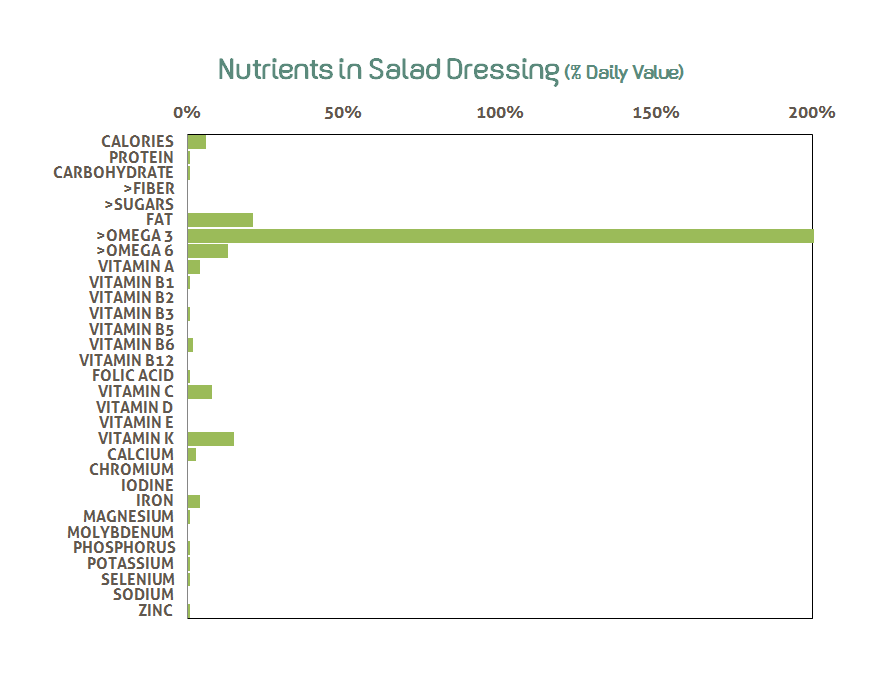
Salad Dressing Suggestions (serves 1)
Ingredients
- 1 tsp raw organic apple cider vinegar (5ml)
- 1 tbsp (15 ml) organic flax or walnut oil (see brands below)
- 1 small garlic clove finely grated (3 g)
- 1 tsp fresh or dried oregano (1g)
- 1-2 tsp fresh parsley finely chopped (2g)
- Pinch of Himalayan sea salt to taste
Directions
In a small bowl, whisk together apple cider vinegar and oil until well combined. Mix in crushed garlic, oregano, parsley and sea salt. You may also combine all ingredients in a blender. Serve on fresh salad and enjoy.
Substitutions
- Raw organic walnuts for Omega 3
- Add 1 small clove garlic grated
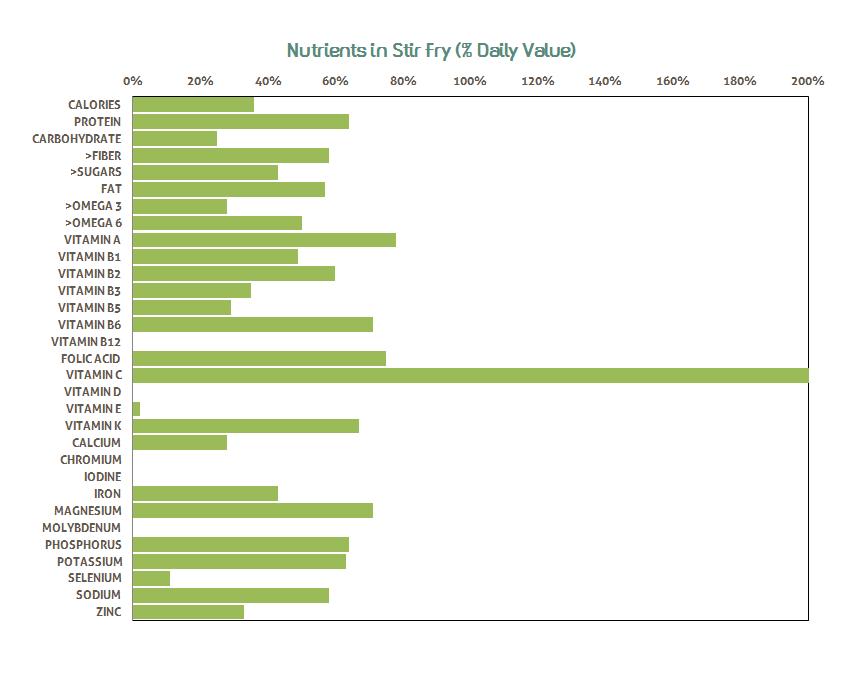
Stir-fry Suggestions (serves 2)
Ingredients
- 1 small head organic broccoli chopped (250 g)
- 1/2 small ish head organic cauliflower chopped (325 g)
- 4 medium sized organic crimini mushrooms, quartered (130 g)
- 1 organic red bell pepper sliced (240 g)
- 1/2 cup water chestnuts (106 g)
- 1/2 cup organic whole organic almonds (100 g)
- 1 tbsp coconut oil (13.5 g)
- 1/4c organic miso paste (70 g) + 2-3 tbsp hot water *
- 1/4 cup organic lemon juice
- 1 tbsp fresh organic ginger grated (15 g)
- 1 tsp turmeric powder (2.6 g)
- 1/4 cup fresh organic cilantro chopped (24 g)
- 1 cup organic brown rice cooked (195 g)
Directions
Rinse brown rice. In a small pot bring 1 1/2 cup water to boil. Add rice and reduce to simmer, cover and cook for 30-40 minutes. Wash and chop all veggies into bite size pieces. In a large pan or wok, heat coconut oil over medium heat. Stir in ginger and turmeric and cook for 1 minute. Add broccoli and cauliflower, stir and cover for 3 minutes. Add bell peppers, mushrooms, water chestnuts and almonds, stir and cover for 3 minutes. *In a small bowl combine miso with hot water until it becomes a smooth, thin consistency. Pour miso paste and lemon juice into wok, stir and cover for 1-2 minutes. Serve on cooked brown rice, top with freshly chopped cilantro. Chew well and enjoy!
Herbal Tea Suggestions
- Dried Licorice root: makes a sweet tasting tea, use 1/2 teaspoon per cup of boiling water, simmer for 5 minutes and steep for 15 minutes then drink 2 to 3 cups a day
- Burdock root, Dandelion root, and Cornsilk tea: prepare this tea the same as the licorice tea
Stress Management Suggestions
When the body and mind is in a reactive or sympathetic mode, large amounts of excitatory catecholamines (including epinephrine, norepinephrine and cortisol) are released which can aggravate the condition leading to hyperactivity, restlessness, insomnia, anxiety, fear and even panic attacks. Breathing and breathing exercises becomes very important to shift from reactive sympathetic state to a parasympathetic and calm state. Being aware of your breathing pattern (especially when you hold your breath or breathing fast), practice slow and regular breathing, having a good sitting or standing posture, avoid multi-tasking and slowing down your pace would greatly reduce your stress hormones and neurotransmitters.
Stress reaction leads to the release of cortisol from the adrenal glands along with sex hormones including estrogen and testosterone. These fluctuating levels can worsen your condition. In order to regulate adrenal function:
- Maintain regular sleep/wake cycles; this will coincide with a healthy glandular rhythm (your internal clock)
- Get adequate sleep every night; lack of sleep with lower your stress tolerance and induce stress hormones
- Eat 4 regular meals a day (3 meals and a snack) including a complex carbohydrate and/or protein at each meal
- Exercise only during the day; exercise in the evening can disrupt your sleep cycle and cause insomnia
- Praying, meditating, reading and taking a bath in the evening helps to slow down your mind and body before bed
- Watching TV, emailing, playing video games, and socializing are not considered relaxation and may disturb sleep
- Staying positive, being grateful and compassionate, and enjoying a good laugh each day also helps
Other Suggestions
Maternal nutrition:
- Maternal intake of vitamin D was found to be associated with reduced risk of eczema
- high maternal intakes of green and yellow vegetables, citrus fruit, and beta-carotene during pregnancy were associated reduced risk of eczema in infants
- intake of allergenic foods and foods rich in omega-6 polyunsaturated fatty acids during pregnancy may increase and foods rich in omega-3 polyunsaturated fatty acids may decrease the risk of allergic diseases in the offspring
- Fish oil supplementation during pregnancy and lactation was found to reduce the risk of infant food allergy and infant eczema
- consumption of apples and fish during pregnancy may have a protective effect against the development of childhood asthma and allergic disease
- probiotic supplementation during pregnancy was found to prevent atopic eczema in offspring 2 to 7 years of age
- maternal dietary intake of magnesium during pregnancy was found to protect against eczema
- Avoid alcohol and smoking
- People who have eczema are more sensitive to viruses and bacteria that affect the skin. Care must be taken to avoid exposure to people who have genital warts, herpes in the active phase, and those who have had a recent smallpox vaccination
- Many times, eczema is caused by an allergic reaction to something eaten or found in a person's environment. It may run in families and may be provoked or aggravated by stress or fatigue.
- Constipation or irregular bowel movements can make eczema worse, because the skin must then eliminate more waste. For more information, refer to the article on constipation.
- Dietary factors should go hand in hand with environmental controls such as replacing clothes and bed linens containing wool or man-made fibers with those containing cotton, using non-biological washing powders and keeping house dust mites under control.
Naturopathic Medicine
It is important to test for food allergies. Certain foods seem to be more likely to cause eczema. Eliminating these foods from the diet is a good way to determine if one or several of them are responsible for the problem. If you are allergic to several foods, remember that must avoid every single allergen for at least a few weeks before you will notice a change in symptoms. The main problem foods are dairy products (including milk, cheese, ice cream, yogurt), eggs, gluten (wheat, rye, barley, spelt, kamut, etc.), corn, and sugar. Ask your naturopathic doctor to do an Elisa blood test for food allergens.
If you have indigestion, ask your doctor about correcting low stomach acid, if appropriate
Treat increased intestinal permeability, intestinal dysbiosis, and systemic candidiasis, if indicated. (Savolainen J. Clin Exp Allergy 1993 Apr;23(4):332-339; Jackson PG, et al. Lancet 1981 Jun 13;1(8233):1285-1286.)
Ask you naturopathic doctor about a non-dairy probiotic regime that includes using Bulgaricus and Lactobacillus initially to heal the gut lining and to repopulate gut microflora, then Bifidobacteria at a later stage
Ask you naturopathic doctor about taking Evening primrose oil
If you have travelled to tropical countries, ask your naturopathic doctor about doing a stool parasite and ovum test, then treat it accordingly.
Click “Ask the Doctor”
References
www.vitasearch.com
www.whfoods.org
www.nutritiondata.self.com
www.ndb.nal.usda.gov/ndb/foods/list
This article is for educational purposes only. This information has not been evaluated by Health Canada nor the Food and Drug Administration. This information is not intended to diagnose, treat, cure, or prevent any disease.
|